


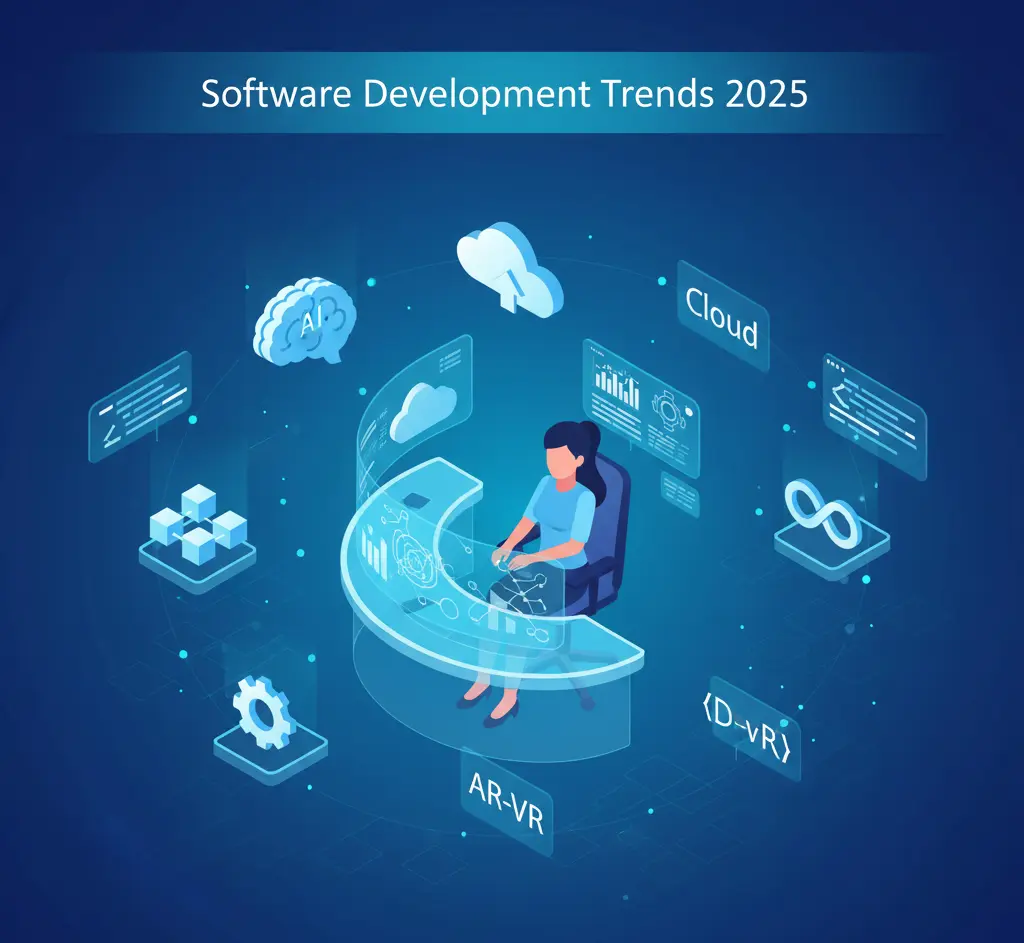
In 2025, the software technology landscape is rapidly evolving, driven by innovations that are reshaping how developers build, deploy, and secure applications. Artificial Intelligence (AI) and Machine Learning (ML) continue to dominate as core drivers—AI-assisted coding tools, generative models, and autonomous “agentic AI” systems are being integrated into development workflows to boost productivity, automate tasks, and accelerate delivery cycles.
AI integration isn’t limited to coding; it extends to testing, debugging, deployment, and optimization, reducing manual effort and improving software quality. Low-code and no-code platforms are democratizing software creation, enabling faster prototyping and empowering non-developers to build apps. Cloud-native architectures such as microservices and serverless computing are now standard, supporting scalable, resilient software ecosystems. Edge computing and decentralized systems bring computing closer to users, boosting real-time performance.
Security takes center stage as threats grow more sophisticated, prompting widespread adoption of DevSecOps and secure software supply chain practices. Meanwhile, quantum computing, composable architectures, and AI-native applications hint at the future of software engineering—where systems become increasingly autonomous, intelligent, and interconnected.
In summary, 2025 is marked by AI-driven innovation, cloud-first strategies, and security-centric development: trends that will define the next decade of software technology.
Leave a Reply